2021年9月29日星期三

2017年12月11日星期一
Ladle with refractory materials are used
 |
| refractory materials |
(1) Clay refractory brick, clay brick A12O3 content is generally between 30% -50%, the price is low. Mainly used for ladle permanent layer and ladle bottom.
(2) high alumina brick. Brick A12O3 content of 50% -80%, mainly for the working layer ladle.
(3) wax stone brick. The refractory supplier brick is characterized by high SiO2 content. Generally more than 80%, anti-erosion than the clay brick and the integrity of the good, and not hanging residue. Commonly used in the ladle wall and package at the end.
(4) Zircon brick. The brick is mainly used for ladle slag line parts. Brick ZrO2 content is generally between 60% -65%.
(5) Magnesia carbon bricks. The brick is mainly used for ladle slag line parts, especially for multi-furnace continuous casting occasions. Brick MgO content is generally about 76%, carbon content of 15% -20%. It is characterized by small erosion of slag, erosion resistance, good resistance to spalling.
(6) aluminum-magnesium castables. The castable is mainly used for the steel body, and is characterized in that, under the action of molten steel, MgO and A12O3 in the castable react with each other to form aluminum oval spinel, thereby improving the thermal shock resistance of the lining.
(7) aluminum-magnesium carbon brick. This brick is developed on the basis of aluminum-magnesium castable ladle lining, long service life.
(8) Do not burn brick. At present, the materials used in ladle firing bricks can be made into corresponding unburned brick. Its characteristics are relatively simple production process, the price is lower. Brick itself has a certain mechanical strength and erosion resistance, easy construction masonry.
If the ladle itself is also used for refining, you can also choose MgO-Cr2O3-A10O3 series and magnesia carbon brick refractory, are: magnesia-chrome brick, magnesia-chrome-aluminum brick, dolomite brick.
In the content of ink material used for ladle lining brick, it is best to apply a layer of anti-oxidation coating on its surface to prevent burning in the package, the lining surface oxidation loose, affecting its service life.
More refractory:
http://www.yilongrefractory.com/
E-mail: sales8@chinaelong.com
Refractory materials for glass furnaces
 |
| Refractory materials |
The word "current" can be read in months or even weeks as the computer industry in the electronics industry changes. When it comes to the development and application of refractories in the glass industry, it can easily be read as five or ten years. Based on this notion of time, we will recall that there has been a change in the discussion of the "current" area (more conservatively) in the latter area.
There are three major driving forces behind the development of refractory materials. The first glass manufacturer typically needs to improve glass quality in order to maintain it at least. The second glass kiln economy required a longer kiln operation cycle and a third pure oxygen combustion system with impact. These three requirements usually determine the choice of improved refractories when repairing the kiln. These impetuses have also prompted the glass manufacturer to use the furnace with improved fire-resistant products for maintenance and repair, as well as the introduction of new technologies for a wide range of maintenance runs.
Melting-cast alumina bricks have been melting pool top this part of the establishment of its application, the main melting high-quality glass pure oxygen combustion furnace was applied. Prior to the advent of pure oxygen combustion technology, only beta alumina bricks were used to melt pool superstructure and no melt cast alumina bricks were used on top of the melting pool. Today, both β-alumina and α-β alumina melt-cast products are used to produce color TV (screen cone), float glass and borosilicate glass pure oxygen combustion furnace some or all of the roof. Melt-cast AZS bricks can typically be used at 1600 ° C or 1650 ° C (depending on the glazing), while furnace tops with fused alumina are successfully operated at 1700 ° C. This gives glass manufacturers greater flexibility when creating refractory glass.
For many years, melt-cast AZS roofs have successfully undergone a cooling and reheating test to enable them to use multiple operating cycles. There is now a bit of experience in the successful implementation of top cooling and reheating of fused-alumina roofing, demonstrating an economically viable life when they use two or more cycles of operation. The results of fused alumina furnace roof observation (thermal observation and shutdown) show that these materials are both chemically and mechanically stable. This was the earliest observation of this type of masonry study since there was neither a fused alumina reference nor the empirical basis of its roof application.
High-chromium refractory products used to be mainly used to enhance the glass furnace, and a small amount used in insulation glass pool furnace. High chrome bricks are increasingly being used by some soda lime glass furnaces. Its main use has not only been limited to all or part of the flow hole, but also for the end wall and to a limited extent for the filler brick. For high chrome brick components, they are potentially dangerously colored, so that high-chromium products are often not compatible with very "white" glass. In the initial period this product was mainly used for colored glass, but high chromium products have also been successfully used in transparent container glass furnaces. The use of high-chromium glass furnaces depends largely on the design of the liquid hole, the cooling of the liquid hole, the daily production of the furnace, and the operation of the furnace. A glass manufacturer may use high-chrome bricks for the entire cover plus the melting tank end wall. High Chromite brickwork liquid caves offer the potential to increase kiln life because this material provides at least twice as much resistance to most glass as molten AZS bricks. However, some design parameters differ from those of fused AZS bricks and need to be discussed with the supplier.
More refractory:
http://www.yilongrefractory.com/
E-mail: sales8@chinaelong.com
2017年11月2日星期四
How to extend the life of refractory materials
 |
| refractory materials |
Thermal, mechanical and chemical factors contribute to the stress in the kiln lining and cause damage. With the kiln, operation and kiln lining in the kiln position of the different factors of the damage is also different. Which decisive role is the flame, kiln and kiln body deformation, they make the kiln bearing a variety of different stress.
For alkaline tiles, there are eight kinds of destructive factors, namely clinker melt infiltration, agglomeration of volatile components, reduction or reduction - oxidation, overheating, thermal shock, thermal fatigue, extrusion and grinding. However, these eight factors have different effects on the damage of different refractory brick lining in kiln, and the mechanism of damage to alkaline brick is described in this paper.
1, clinker melt infiltration:
Clinker melt mainly from the kiln and fuel, infiltration phase is mainly C2S, C4AF. The infiltration of C2S and C4AF in the metamorphic layer strongly dissolves magnesia and chrome ore in magnesia carbon bricks, precipitates secondary silicates such as CMS and magnesium rose pyroxene (C3MS2), and sometimes even precipitates potassium Stone; and the melt will be filled with brick lining pores, so that part of the brick layer of dense and embrittlement; combined with thermal stress and mechanical stress dual role, resulting in easy cracking refractory brick peeling. Due to C2S, C4AF above 550 ℃ began to form, and pre-decomposition kiln into the kiln material temperature has reached 800 ℃ ~ 860 ℃, so clinker melt penetration throughout the pre-decomposition kiln, the clinker melt on the pre-decomposition Kiln lining with a certain infiltration into the erosion effect.
2, the condensation of volatile components:
Pre-decomposition kiln, alkaline sulphate and chloride and other components volatile agglomeration, repeated circulation, resulting in the accumulation of these components in raw materials. By the production practice, the R2O, SO3 and CI- contents of the raw material in the warmest preheater of the kiln are often increased to 5 times, 3 to 5 times and 80 to 100 times respectively higher than that of the raw material. When the hot material enters the third part of the kiln cylinder (800 ° C to 1200 ° C), the volatile components in the material will aggregate in all the brick and brick layers, And the erosion of the adjacent components other than magnesite, resulting in brick thermal penetration stability of the infiltration layer is significantly reduced, the formation of expansion of potassium nepheline, garnet, the refractory brick lime damage, and thermal - mechanical stress Under the combined action of peeling off. The more the depth of the kiln lining is affected by the alkali salt, Selection.
3, reduction or reduction - oxidation reaction:
When the thermal system in the kiln is unstable, it is easy to produce the reduction flame or the incomplete combustion, so that the Fe3 + reduction or Fe2 + in the magnesia-chrome brick shrinks, and the migration and diffusion of Fe2 + in the magnesite crystal is stronger than Fe3 + More, which further exacerbated the volume shrinkage effect, so that the brick hole, the structure weakened, the intensity decreased. At the same time, the reduction of the kiln gas and the alternating atmosphere of the oxidation of the shrinkage and expansion of the volume effect occurs repeatedly, the brick will produce chemical fatigue. This process mainly occurs in the absence of kiln protection of magnesium chrome brick.
4, overheating:
When the kiln heat load is too high, so that the brick surface for a long time to lose the protection of the kiln, the hot surface layer of the matrix at high temperature melting and moving to the cold layer direction, leaving the brick lining layer of dense, hot surface layer is loose Porous (generally easy to occur in the firing area of the firing zone), which is not resistant to abrasion, shock, vibration and thermal fatigue, easy to damage.
5, thermal shock:
When the kiln is not working properly or kiln leather is unstable, the alkaline tiles are susceptible to thermal shock. Kiln of the sudden collapse of the brick surface temperature caused by a sudden surge (or even up to thousands of degrees), leaving the brick to produce a lot of thermal stress. In addition, the frequent opening and closing of the kiln to produce alternating alternating heat within the brick. When the thermal stress, once beyond the structural strength of the brick lining, the brick suddenly cracks, and along the structure of the weakening of the Department continue to deepen the deepening, and finally the brick fragmentation. When the kiln skin falls, the broken brick in the hot surface layer is taken to keep the brick from damage. The thermal shock phenomenon can easily occur in the transition zone near the kiln.
6, thermal fatigue:
In the kiln operation, when the brick lining is not in the material layer, the surface temperature is lowered, and when the brick lining is exposed to the flame, the surface temperature is increased. Kiln each turn a week, brick lining surface temperature rise and fall range of up to 150 ℃ ~ 230 ℃, the impact of depth 15mm ~ 20mm. Such as pre-decomposition kiln speed of 3r / min, this periodic temperature rise and fall of up to 130,000 times per month. This repeated temperature rise and fall causes the thermal fatigue of the surface layer of the alkaline brick to accelerate the peeling of the brick.
7, squeeze:
Rotary kiln operation, the kiln refractory lining material by the pressure, tension, torque and shear mechanical stress, such as the combined effect. Among them, the rotation of the kiln, the oval of the kiln and the kiln fall, the bricks are subjected to the dynamic load; the weight of the refractory brick and the kiln and the thermal expansion of the brick itself make the brick bear the static load. In addition, between the lining brick and the kiln body, the relative movement between the brick lining and the brick lining, and the welds on the retaining ring and the kiln body, will cause the brick lining to withstand various mechanical stresses. When all these stresses exceed the structural strength of the brick, the brick is cracked. This phenomenon occurs in the kiln lining of the precalciner kiln.
8, wear:
Pre-decomposition kiln kiln discharge area without kiln leather protection, and clinker and large kiln leather and hard, will be on the part of the brick lining, resulting in more serious impact and abrasion damage.
In short, the impact of kiln lining consumption of more factors, but also more complex, and only continue to explore, the use of new technologies, new materials, improve the operation and management level, in order to achieve both reduce consumption, but also the kiln system balanced and stable operation.
More refractory products:
http://www.yilongrefractory.com/AllProductServlet?id=1&number=20
E-mail:sales8@chinaelong.com
2017年10月23日星期一
Refractory materials for industrial furnaces
 |
| Refractory materials for industrial furnaces |
High-strength lightweight clay high alumina brick, high-aluminum foam brick, poly light brick, light mullite insulation brick, heavy carburizing refractory brick, diatomaceous earth insulation brick, pearlite refractory bricks. All kinds of pit furnace, box furnace, carburizing furnace, trolley furnace, vibration furnace, steel chain plate furnace, mesh belt furnace, crucible furnace, push burning furnace, vacuum furnace, salt bath furnace with light, Heavy standard fire bricks, shaped bricks. Electric corundum furnace tube, silicon carbide furnace tube, high alumina furnace tube.
Electric radiant tube with corundum, high aluminum insulator, plug cover clip.
Electric furnace furnace with corundum silicon carbide brick, radiant furnace floor. Textile machinery singeing machine with a variety of specifications of silicon carbide fire bricks, honeycomb panels, masonry with a variety of high temperature adhesives.
Fire mud, anti-carburized mud, aluminum silicate fiber cotton, aluminum silicate fiber felt, aluminum silicate fiber board.
More refractory material:
http://www.yilongrefractory.com/AllProductServlet?id=1&number=20
E-mail:sales8@chinaelong.com
2017年8月28日星期一
The difference between insulation material and refractory material
 |
| refractory material |
There are many kinds of insulation products, including foam, mineral cotton products, foam glass, expanded perlite insulation products, EPS powder EPS insulation film, mineral spray cotton, foam cement insulation products. Selection of insulating materials in the construction of the common types of applications and design selection should be consistent with GB / T 17369-1998 "building insulation materials, application types and basic requirements" requirement.
In addition to the material should consider the thermal conductivity of the material, but also should consider the material of water absorption, combustion performance, strength and other indicators. The performance characteristics of different insulation materials see the corresponding classification guide.
Refractory material refractoriness of not less than 1580 ℃ of a class of inorganic non - metallic materials. Refractory degree refers to the refractory cone specimen in the absence of load conditions, resistance to high temperature effect without softening the melting of the Celsius temperature. Refractory materials are widely used in the metallurgical, chemical, petroleum, machinery manufacturing, silicate, power and other industrial fields, the largest in the metallurgical industry, accounting for 50% of the total output of 60%.
Frequently used special materials are AZS refractory brick, corundum brick, directly combined with magnesia-chrome brick, silicon carbide brick, silicon nitride combined with silicon carbide brick, nitride, silicide, sulfide, boride, carbide and other non-oxide refractories ; Calcium oxide, chromium oxide, alumina, magnesium oxide, beryllium oxide and other refractories. Frequently used insulation refractory abrasive
Refractory materials are diatomite products, asbestos products, thermal panels and so on.
Insulation material is used for building envelope or thermal equipment, the heat transfer of the material or material complex, including both insulation materials, including cold materials. Insulation brick on the one hand to meet the building space or thermal equipment, the thermal environment, on the other hand also saves energy. Therefore, some countries will be adiabatic materials as coal, oil, natural gas, nuclear energy after the "fifth largest energy." A material with a strong resistance to heat flow. Mainly used for housing construction of the wall, roof or industrial pipes, furnaces and other insulation and insulation. According to the principle of insulation is divided into:
① porous material. The gas with a small thermal conductivity is filled with adiabatic pores. Generally the air is the thermal resistance medium, mainly the fibrous aggregation organization and the porous structure material. Foam plastic insulation is better, followed by mineral fibers (such as asbestos), expanded perlite and porous concrete, foam glass.
② Reflective material. Such as aluminum foil can rely on thermal reflection to reduce radiation heat transfer, a few layers of aluminum foil or paper with a thin layer of composite structure, can also increase the thermal resistance. Insulation materials are often used in the form of loose materials, coils, plates and prefabricated blocks for the insulation and insulation of roofs, facades and floors of buildings. Can be directly masonry (such as aerated concrete) or on the roof and envelope for the core material, but also paved into the ground insulation layer. Fiber or granular insulation material can be filled in the wall, can also be sprayed on the wall, both adiabatic, sound absorption, decoration and fire and other effects.
More refractory material:
http://www.yilongrefractory.com/AllProductServlet?id=1&number=20
E-mail:sales8@chinaelong.com
2017年7月11日星期二
Refractory materials for different parts of electric ARC furnace(1)
 |
| Refractory materials for different parts of electric ARC furnace |
Electric Arc Furnace life refers to the life of furnace roof. After the 1980s, with the expansion of steel-making electric arc furnace capacity and the increase of unit power, the working conditions of the furnace roof become more demanding, the refractories used for electric Arc furnace also changed.
The roof of arc furnace commonly use high alumina brick to masonry, Al2O3 content of between 75% to 85%. Compared with silica brick, the characterized of high alumina brick is high refractoriness, thermal shock resistance, good slag resistance, high compressive strength. Because of its high thermal shock resistance and structural integrity, it is not necessary to produce shaped bricks. There ie a rich bauxite resources in China, high alumina insulating brick has become the main refractory material on Arc Furnace roof, its life is 2 to 3 times of silica brick roof . With the development of large-scale ultra-high-power electric furnace, the service life of high-alumina brick is reduced, Leading to the further use of calcined or not burning magnesia brick and magnesia-chrome brick and other alkaline brick.
(2) Refractories for ARC furnace wall
The furnace wall is divided into general furnace wall, slag line area and hot spot that near the arc . The main furnace wall mainly uses the magnesia brick, the tar pitch combination and the asphalt impregnation burns the dolomite brick and the magnesite refractory brick masonry, also has uses does not burn the magnesia alkaline brick and the asphalt union magnesia and the dolomite ramming material, That all have longer service life. ARC furnace wall which Ultra-high power or smelting special steel used the magnesia-chrome brick and high-quality magnesia brick to masonry.
Slag line area and the hot spot of furnace wall is weak link. As the furnace wall life depends mainly on the degree of damage of hot spot, so the parts of lining should be special attention. the 20th century 70 years ago, the masonry of the site commonly used cast magnesium chrome bricks, combined with or re-combination of magnesia- chrome brick, the service life is 100 to 250 furnace times. Into the 80's, in these parts widely used magnesia carbon bricks
to masonry, showing that in addition to high temperature and slag resistance performance,service life be significantly improved , the high-power electric arc furnace to more than 300 times in China.
Article source:
http://www.yilongrefractory.com/news/Refractory%20materials%20for%20different%20parts%20of%20electric%20ARC%20furnace(1).html
E-mail:sales8@chinaelong.com
2017年6月28日星期三
Development of continues casting & tundish
 |
| Refractory Castable |
Compared with traditional mould refractory castable casting, CCM can improve metal recycle rate and low down power consumption. CCM can make the melting work simple and short the melting time, in which way the production efficiency can improve in a large degree. Tundish is a middle progress of steel making, and it is the kep point which can decide continues casting or not. Furthermore, tundish would have a big effect on melten refractory material steel quantity and quality. Its functions are as following:
1. Diversion. For multi-strand CCM machine, the melten steel would be divided from tundish.
2. Continues casting. When refractory firebrick multi-furnace continuous casting, tundish can be a holder when changing ladle.
3. Lowing down presure.
4. Protecting melten steel quality. Through using covering agent, long nozzle and other protecting device, tundish can help to protect the melten steel quality.
Article source:
Development of continues casting & tundish
E-mail:sales8@chinaelong.com
2016年11月7日星期一
Refractory bricks - High alumina bricks - Basic information
high insulating brick refractory than clay brick and semi-silica brick refractoriness should be high, up to 1750 ~ 1790 ℃, is a senior refractory
Al2O3 content of more than 90%, known as corundum brick. Because of different resources, national standards alumina brick are not entirely consistent. For example, European countries for high alumina refractory material Al2O3 content of the provisions of the lower limit of 42%. In China, according to alumina content in the high alumina brick is usually divided into three classes: Ⅰ and so on ─ ─ Al2O3 content> 75%; Ⅱ ─ ─ Al2O3 content of 60 ~ 75%; Ⅲ ─ ─ Al2O3 content of 48 ~ 60%.
Al2O3 in high alumina brick is close to neutral refractory and can resist the erosion of acid slag and alkaline slag. Because of containing SiO2, the ability of resisting alkali slag is weaker than that of acid resistant slag.
Alumina content of 48% or more of a neutral refractories material. From bauxite or other alumina content of the higher raw materials formed and calcined. High thermal stability, refractoriness above 1770 ℃. Slag resistance is good for masonry electric furnace, glass melting furnace, cement rotary furnace lining.
Mainly used for masonry blast furnace, hot stove, furnace top, blast furnace, reverberatory furnace, rotary kiln lining. In addition, high alumina brick is also widely used as open hearth lattice regenerative grid bricks, gating system with plug head, outlet brick. But the price of high-alumina brick clay brick than high, so with clay brick to meet the requirements of the place do not have to use high-alumina brick.
refractory company Henan Xinmi Changxing Refractory Material Co., Ltd. Located in Henan Province,China.ChangXing's product portfolio covers shaped products such as refractory materials,refractory brick, refractory castable,refractory nozzle, ceramic fiber, slide gate, etc; unshaped products including repair, construction and casting mixes and mortars.exported to more than 20 countries, such as Thailand, Indonesia, Pakistan, Saudi Arabia, South Africa, Turkey, Iran, Iraq and so on.
Al2O3 content of more than 90%, known as corundum brick. Because of different resources, national standards alumina brick are not entirely consistent. For example, European countries for high alumina refractory material Al2O3 content of the provisions of the lower limit of 42%. In China, according to alumina content in the high alumina brick is usually divided into three classes: Ⅰ and so on ─ ─ Al2O3 content> 75%; Ⅱ ─ ─ Al2O3 content of 60 ~ 75%; Ⅲ ─ ─ Al2O3 content of 48 ~ 60%.
Al2O3 in high alumina brick is close to neutral refractory and can resist the erosion of acid slag and alkaline slag. Because of containing SiO2, the ability of resisting alkali slag is weaker than that of acid resistant slag.
Alumina content of 48% or more of a neutral refractories material. From bauxite or other alumina content of the higher raw materials formed and calcined. High thermal stability, refractoriness above 1770 ℃. Slag resistance is good for masonry electric furnace, glass melting furnace, cement rotary furnace lining.
Mainly used for masonry blast furnace, hot stove, furnace top, blast furnace, reverberatory furnace, rotary kiln lining. In addition, high alumina brick is also widely used as open hearth lattice regenerative grid bricks, gating system with plug head, outlet brick. But the price of high-alumina brick clay brick than high, so with clay brick to meet the requirements of the place do not have to use high-alumina brick.
refractory company Henan Xinmi Changxing Refractory Material Co., Ltd. Located in Henan Province,China.ChangXing's product portfolio covers shaped products such as refractory materials,refractory brick, refractory castable,refractory nozzle, ceramic fiber, slide gate, etc; unshaped products including repair, construction and casting mixes and mortars.exported to more than 20 countries, such as Thailand, Indonesia, Pakistan, Saudi Arabia, South Africa, Turkey, Iran, Iraq and so on.
2016年9月5日星期一
Recommendations active national green inorganic thermal insulation materials
Refractories used in various fields of steel, nonferrous metals, glass, cement, ceramics, petrochemical, machinery, boilers, light industry, power, military and other national economy, is to ensure that these industries and technological development, production and operation of essential basic materials, It plays an irreplaceable role in the development of high-temperature industrial production.
YT insulation material is non-combustible Class A, is one for use in a variety of climates safe environment protection and energy class A fire insulation products. It is based on a natural high temperature lightweight materials as aggregate, stepless modified materials and nano-scale ultra-low thermal conductivity (0.013W / (mk)) material, a flexible material and gradual blending of principle, the use of advanced international It promises bonding and cracking technology, through factory production configuration, to provide a high-quality one-component finished; it becomes insulation, thermal insulation, fire, light, sound, water resistant, anti-cracking, hollowing anti-shedding and other properties as one of the environmentally friendly energy-saving wall insulation energy-saving products, winter can raise the indoor temperature 5-8 degrees in summer can reduce the indoor temperature 4-7 degrees, to meet national energy requirements.
Summarized in the following six performance advantages:
1, insulation energy saving effect - the fusion of ultra-low thermal conductivity of the material for the products to provide a guarantee of energy-saving;
2, security, fire protection, long life --A level non-combustible material. Products are of high quality inorganic polymeric material having the same properties and building the wall can be achieved with the construction body with life;
3, the construction is simple and quick: - shorten the construction period by more than half since the product is one component inorganic product, you need only product on the wall and water, stirring to operate without excessive technical requirements on construction, you can usually plasterers operation and does not require high technical requirements and plate type construction complex process, so the duration shorten the time;
4, resistant to water, acid, strong adaptability. Products and wall seamless connectivity, high stability, weather resistance; can avoid building air conditioning panels, window sills, floors and other parts along the leakage, easy to form hollowing cracking problem; while its strong adhesion and acid adding an alkaline material, make the body to keep building more complete surface layer will not appear moldy walls, chalking phenomenon;
5, good environmental performance and comfortable - with a certain permeability. Component products are able to remain active, flexible component, which itself has cool breathability, so the use of the product will not be room tightness, able to create a body feel relaxed and comfortable environment.
6, cost-effective superior - Construction products easy to operate, and its construction without primary treatment, also without mesh, rivets, cracking mortar and leveling putty and other processes, greatly reducing labor costs and material costs; and its Wall body with the characteristics of life, but also to avoid a repeat engineering insulation waste.
Henan Xinmi Changxing Refractory Material Co., Ltd. Located in Henan Province,China.ChangXing's product portfolio covers shaped products such as refractory materials,refractory brick, refractory castable,refractory nozzle, ceramic fiber, slide gate, etc; unshaped products including repair, construction and casting mixes and mortars.exported to more than 20 countries, such as Thailand, Indonesia, Pakistan, Saudi Arabia, South Africa, Turkey, Iran, Iraq and so on.

YT insulation material is non-combustible Class A, is one for use in a variety of climates safe environment protection and energy class A fire insulation products. It is based on a natural high temperature lightweight materials as aggregate, stepless modified materials and nano-scale ultra-low thermal conductivity (0.013W / (mk)) material, a flexible material and gradual blending of principle, the use of advanced international It promises bonding and cracking technology, through factory production configuration, to provide a high-quality one-component finished; it becomes insulation, thermal insulation, fire, light, sound, water resistant, anti-cracking, hollowing anti-shedding and other properties as one of the environmentally friendly energy-saving wall insulation energy-saving products, winter can raise the indoor temperature 5-8 degrees in summer can reduce the indoor temperature 4-7 degrees, to meet national energy requirements.
Summarized in the following six performance advantages:
1, insulation energy saving effect - the fusion of ultra-low thermal conductivity of the material for the products to provide a guarantee of energy-saving;
2, security, fire protection, long life --A level non-combustible material. Products are of high quality inorganic polymeric material having the same properties and building the wall can be achieved with the construction body with life;
3, the construction is simple and quick: - shorten the construction period by more than half since the product is one component inorganic product, you need only product on the wall and water, stirring to operate without excessive technical requirements on construction, you can usually plasterers operation and does not require high technical requirements and plate type construction complex process, so the duration shorten the time;
4, resistant to water, acid, strong adaptability. Products and wall seamless connectivity, high stability, weather resistance; can avoid building air conditioning panels, window sills, floors and other parts along the leakage, easy to form hollowing cracking problem; while its strong adhesion and acid adding an alkaline material, make the body to keep building more complete surface layer will not appear moldy walls, chalking phenomenon;
5, good environmental performance and comfortable - with a certain permeability. Component products are able to remain active, flexible component, which itself has cool breathability, so the use of the product will not be room tightness, able to create a body feel relaxed and comfortable environment.
6, cost-effective superior - Construction products easy to operate, and its construction without primary treatment, also without mesh, rivets, cracking mortar and leveling putty and other processes, greatly reducing labor costs and material costs; and its Wall body with the characteristics of life, but also to avoid a repeat engineering insulation waste.
Henan Xinmi Changxing Refractory Material Co., Ltd. Located in Henan Province,China.ChangXing's product portfolio covers shaped products such as refractory materials,refractory brick, refractory castable,refractory nozzle, ceramic fiber, slide gate, etc; unshaped products including repair, construction and casting mixes and mortars.exported to more than 20 countries, such as Thailand, Indonesia, Pakistan, Saudi Arabia, South Africa, Turkey, Iran, Iraq and so on.
2016年8月23日星期二
Application and advantages of acid proof brick
Acid proof brick use quartz, feldspar and clay as main raw material. It is anti corrosion and acid proof material sinterred through high temperature kiln. It possesses features of high acid resistance, low water absorption rate, not easily be oxidized under room temperature, not easily be contaminated by media. The main component of acid proof brick is silica which is kind of Mullite formed by sintering under high temperature, which is a material with high acid resistance. Because its intensive structure, low water absorption rate, it can be resistant against any alkaline medium with any concentration, but it is not resistant to high temperature molten alkali. Refractory material acid brick containing 70% or more silicon dioxide. It is mainly used in chemical industries, such as ditch puzzle acid, acid wells, acid storage library and impacted ground that bears huge acid.
Article source:
http://www.yilongrefractory.com/news/Application%20and%20advantages%20of%20acid%20proof%20brick.html

Article source:
http://www.yilongrefractory.com/news/Application%20and%20advantages%20of%20acid%20proof%20brick.html
2016年8月4日星期四
Some knowledge about Magnesia Carbon Brick in changxing refractory
 |
| Magnesia Carbon Brick is widely used in Electric Arc Furnace sidewalls, converters, hotspots and coldspots, and ladle furnace slag lines. |
Magnesia carbon brick is a compound refractory material. It takes use of slag resistance ability of magnesite sand, high thermal conductivity and low thermal expansion of carbon to compensate the poor spalling resistance of magnesite sand which is the biggest drawback.
Magnesia carbon bricks are mainly used in the lining of converter furnace, AC arc furnace, DC arc furnace and slag zone of ladle. The quality of magnesite sand which is the main refractory raw material of magnesia carbon bricks effects much on the performance of magnesia carbon bricks. The higher the content of Magnesium Oxide, the less impurity, the stronger resistance to slag penetration and slag melting loss.
Article source:
2016年7月21日星期四
The reasons that the damage of ladle upper nozzle and its reventive measures

1. The reasons that the damage of ladle upper nozzle
1) Under the scouring and erosion of liquid steel and steel slag, the slag erosion will occur under wrong operation process.
2) Mechanical damage during installation process.
1) Under the scouring and erosion of liquid steel and steel slag, the slag erosion will occur under wrong operation process.
2) Mechanical damage during installation process.
2. To prevent the damages of refractory material sliding gate nozzle system, measures should be taken as below:
1) Use better raw material with high corrosion and erosion resistantance to make the upper nozzle, such as the corundum quality upper nozzle.
2) Choose to use products with high mechanical strength.
3) Note the operations of ladle casting process, to avoid the discharge of slag.
1) Use better raw material with high corrosion and erosion resistantance to make the upper nozzle, such as the corundum quality upper nozzle.
2) Choose to use products with high mechanical strength.
3) Note the operations of ladle casting process, to avoid the discharge of slag.
Article sourse:
2016年7月13日星期三
Magnesia brick thermal stability and strong points in China

Chrome ore and magnesia carbon brick magnesite-chrome brick mill Compact fitted after a total production of fine powder, coarse granule combined with brick and magnesite, are effective measures to eliminate loose effect. In this way made of magnesia-chrome brick, compared with ordinary magnesia-chrome brick, bricks of low porosity and compressive strength, refractories and bending strength are higher. With the chrome ore and magnesia carbon bricks properties powder compact, high temperatures, calcination of magnesite-chrome brick made of synthetic magnesia-chrome sand, slag resistance and high temperature strength than other magnesite-chrome brick good.
Poor thermal stability of mgo brick supplier:
Magnesia brick can only take water-2-3. Expanded the most magnesia bricks in refractory, low coefficient of linear expansion. So when the magnesia brick oven, you want to have plenty of expansion joints. dration of magnesia brick: magnesia brick prolonged under wet condition can slowly drate, magnesia brick strength greatly reduced, so you must pay firebrick refractory sale attention to moisture when stored magnesia brick.
Henan Xinmi Changxing Refractory material Co., Ltd. our product portfolio covers shaped products such as refractory material, refractory brick, refractory castable, refractory nozzle, ceramic fiber,slide gate, etc;
2016年4月18日星期一
How to Choose Refractory Bricks Used for Different Parts of Blast Furnace
 |
| Mainly used for coke oven, hot blast stove, acid steelmaking furnace and glass melting furnace. The products can be manufactured according to customers' different requirements. |
The completion of the industrial experiment stage in Krivoy Rog coking plants, coke oven masonry and recommended room three thermal repair methods: flame gunning; using oxygen to the ceramic welding; using the exothermic material (heating material) to repair. The process principle of common: with the help of heat generated to form a protective layer on the surface of refractory composite masonry mending surface.
Flame gunning method of flame gunning refractory products, powder particles melt in the liquid or gaseous fuel flame, and was sent to the surface to be repaired. At this point the masonry was nozzle flame supplementary heating, so using this method may not have special restrictions on temperature is put forward in this paper, and can adopt refractory powder cheaper to obtain high-quality gunning layer. Principle of ceramic welding method is adding to the material of strong oxidant (exothermic material) - aluminum and silicon. Wind transport by means of oxygen jet flame method, oxidant and refractory powder to the surface to be repaired.
http://www.yilongrefractory.com/news/Increase%20refractory%20materials%20anti%20damage%20ability%20by%20changing%20using%20method.html
2016年1月27日星期三
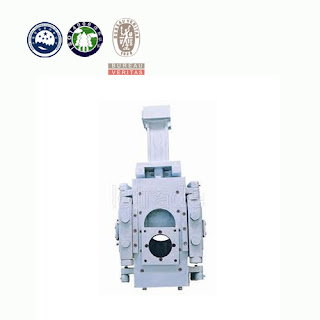
Different Types of Sliding Mechanism Used for Ladle Furnace
As a
refractory factory, We Henan Xinmi Changxing Refractory Material Co,. Ltd supply
various types sliding
mechanism for ladle furnace. Now we would like share with you as follows.
Generally speaking, there are two types of sliding
mechanism: Manpower and Hydraulic pressure.
1.
Manpower
a.
C40 used for ladle with capacity of 10-30 tons
b.
B50 for 20-30 tons
c.
B60 for 40-50 tons
2.
Hydraulic pressure
d.
250 for 20-30 tons
e.
310 for 40-60 tons
f.
359 for 50-80 tons
g.
400 for 60-100 tons
h.
459 for 80-150 tons
Apart
from sliding
mechanism, we manufacture ladle nozzle and slide gate plate as well,
customized size are acceptable, welcome for inquiry!
Sliding Mechanism
 |
2016年1月13日星期三
The Role of Aluminum in Magnesia Carbon Brick
The main effect of adding aluminum powder into magnesia carbon brick is antioxidant. The presence of carbon in magnesia carbon brick is to prevent slag erosion in the brick, and carbon itself has the characteristics of easy oxidation. When carbon in magnesia carbon brick is oxidized, the erosion resistance of brick is declined sharply, which will accelerate the damage of the brick, reduce its service life. In order to prevent the oxidation of carbon, we add metal aluminium powder to protect the carbon in brick. The reaction mechanism is as follows:
1. when magnesia carbon brick is heated, active metal aluminum in brick will firstly react with carbon, became high melting point carbide, then carbon will reunite, getting Al4C3 and Al2O3. Al4C3 will stay on the surface of MgO, to prevent the penetration of slag erosion. In this way, it will improve the bricks erosion resistance, slag resistance and spalling resistance.
2. When the magnesia carbon bricks under high temperature condition, active aluminum will be oxidized and become high melting product Al2O3. It is a phase change process from metal into nonmetal, the volume of oxidation Al2O3 will have a expansion, making the pores in brick be dense, increasing bricks bulk density and forming the ceramic combination, so as to improve the bricks high temperature rupture resistance.
1. when magnesia carbon brick is heated, active metal aluminum in brick will firstly react with carbon, became high melting point carbide, then carbon will reunite, getting Al4C3 and Al2O3. Al4C3 will stay on the surface of MgO, to prevent the penetration of slag erosion. In this way, it will improve the bricks erosion resistance, slag resistance and spalling resistance.
2. When the magnesia carbon bricks under high temperature condition, active aluminum will be oxidized and become high melting product Al2O3. It is a phase change process from metal into nonmetal, the volume of oxidation Al2O3 will have a expansion, making the pores in brick be dense, increasing bricks bulk density and forming the ceramic combination, so as to improve the bricks high temperature rupture resistance.

2015年12月7日星期一
Technical Innovation of Carbon Brick for Blast Furnace Hearths--Changxing Refractory
Possessing with the excellent corrosion
resistance and high thermal conductivity which can lead to easily form a
protective layer for blast furnace hearth, carbon bricks have been used as refractory material for hearths for
more than half century.
To further improve its performance, the refractory experts have carried out many investigations recently. Finally, they find out some
main reasons which caused the damage. They are including as below.
1) The penetration of molten iron into pores.
2) Erosion due to direct contact with molten iron
(dis-solution by carburizing).
3) Embrittlement of the material on hot side
(loss of cooling capacity).
In order to enhance its corrosion resistance, the
experts have developed new technology to get new refractory carbon brick through
numerous experiments.
1) Add
the aluminum oxide which has a good resistance to molten steel.
2) Reduce
the pore diameter to prevent the penetration of molten steel and other impurity
items.
3) Enhance
the high thermal conductivity to reduce the surface temperature.
4) Add
the TiC to improve the corrosion against molten steel, increase its viscosity
and slow down the flow which could effectively reduce the damage on carbon
brick.
2015年12月2日星期三
The Best Refractories for Induction Furnace -- 25+ Heats Silica Ramming Mass
In
recent years, silica ramming mass is widely used in induction furnace. Compared
with traditional refractory lining
material, this product is of lower cost, shorter sintering time and better
working condition.
To offer clients better refractory products, we have successfully
developed our 25+ heats silica ramming mass. As per actual working, we summed
up the material consumption as following.
1.
First heat: 10-15mm
2.
Rest heat: 3-5mm
As per our
experience, we should leave 70mm as save level. So if the
lining thickness
is 180/300/450mm, we could promise the least service life of our refractory material to be 25 heats.
If the working condition is convenient, 30-40 heats is no problem.
Furthermore, our silica ramming mass can
also be applied in tundish and ladle. Service life can namely be 48-60 hours/
200+ heats.
Because
of the great advantages as above, our silica ramming mass is very welcomed by
our clients all over the world say Bangladesh, Ghana, South Africa, and Indonesia,
etc. If more interests, please feel free to make us informed, our professional
teams are ready to give you our reliable service. For new clients, we would
offer more preferential as following.
1.
Lower price trial order
2.
Professional refractory technicians overseas
service
Therefore, what
are you waiting for? Take your phone and call us!
 |
2015年10月20日星期二
Intermediate frequency furnace ramming material

Intermediate
frequency furnace ramming material has many names, including dry ramming
material vibration of intermediate frequency furnace, medium frequency furnace lining
materials, intermediate frequency furnace refractory material, and intermediate
frequency furnace dry vibration material. All those names are saying the same refractory product, and the properties
and usage of all of them are the same. Intermediate frequency furnace ramming
material refers to a kind of unshaped refractory
products which are applied in the method of ramming (by human or machine), and
then becomes hard in heating.
According to
chemical properties, ramming material can be divided into acidic, neutral and alkaline
ramming material. Acid intermediate
frequency furnace ramming material is mainly made from high purity quartz
and fused silica. During composite period, sintering agent uses composite
additive as main material. Neutral intermediate frequency furnace ramming
material uses alumina, high alumina material as main raw materials, it also
uses composite additive as sintering agent. What makes alkaline ramming
material different from the above two kinds of ramming materials is that its
main raw materials are high purity fused corundum, high purity fused magnesia
and high purity spinel. And also it uses composite additive as sintering agent.
The above three kinds of ramming materials which are acidic, neutral and alkaline
intermediate frequency furnace ramming materials are widely used for coreless intermediate
frequency furnace and cored induction furnace.
订阅:
博文 (Atom)
-
 Refractory Brick — Magnesia Alumina Carbon Brick, Alumina Magnesia Carbon Brick, Magnesia Calcium Brick A product which can help to rai...
 -
Because of the low price of refractory scrap, the market on such materials is huge around the world, while not everyone can manage to get ...
-
In order to obtain early high mechanical strength, ordinary refractory castable tend to have a higher proportion of cement content (10% to...