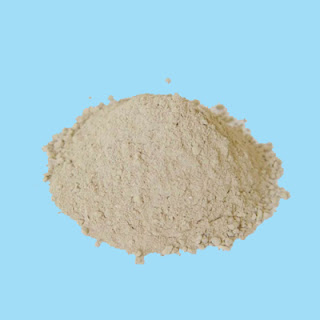
显示标签为“refractory castable”的博文。显示所有博文

2017年12月11日星期一

Ladle with refractory materials are used

refractory materials
Common types of ladle refractories:
(1) Clay refractory brick, clay brick A12O3 content is generally between 30% -50%, the price is low. Mainly used for ladle permanent layer and ladle bottom.
(2) high alumina brick. Brick A12O3 content of 50% -80%, mainly for the working layer ladle.
(3) wax stone brick. The refractory supplier brick is characterized by high SiO2 content. Generally more than 80%, anti-erosion than the clay brick and the integrity of the good, and not hanging residue. Commonly used in the ladle wall and package at the end.
(4) Zircon brick. The brick is mainly used for ladle slag line parts. Brick ZrO2 content is generally between 60% -65%.
(5) Magnesia carbon bricks. The brick is mainly used for ladle slag line parts, especially for multi-furnace continuous casting occasions. Brick MgO content is generally about 76%, carbon content of 15% -20%. It is characterized by small erosion of slag, erosion resistance, good resistance to spalling.
(6) aluminum-magnesium castables. The castable is mainly used for the steel body, and is characterized in that, under the action of molten steel, MgO and A12O3 in the castable react with each other to form aluminum oval spinel, thereby improving the thermal shock resistance of the lining.
(7) aluminum-magnesium carbon brick. This brick is developed on the basis of aluminum-magnesium castable ladle lining, long service life.
(8) Do not burn brick. At present, the materials used in ladle firing bricks can be made into corresponding unburned brick. Its characteristics are relatively simple production process, the price is lower. Brick itself has a certain mechanical strength and erosion resistance, easy construction masonry.
If the ladle itself is also used for refining, you can also choose MgO-Cr2O3-A10O3 series and magnesia carbon brick refractory, are: magnesia-chrome brick, magnesia-chrome-aluminum brick, dolomite brick.
In the content of ink material used for ladle lining brick, it is best to apply a layer of anti-oxidation coating on its surface to prevent burning in the package, the lining surface oxidation loose, affecting its service life.

More refractory:
http://www.yilongrefractory.com/
E-mail: sales8@chinaelong.com

Refractory materials for glass furnaces

Refractory materials
There are three key drivers behind the evolution of refractories: maintaining improved glass quality; economic requirements on glass kilns to make kilns run longer and impact after pure oxygen combustion systems.
The word "current" can be read in months or even weeks as the computer industry in the electronics industry changes. When it comes to the development and application of refractories in the glass industry, it can easily be read as five or ten years. Based on this notion of time, we will recall that there has been a change in the discussion of the "current" area (more conservatively) in the latter area.
There are three major driving forces behind the development of refractory materials. The first glass manufacturer typically needs to improve glass quality in order to maintain it at least. The second glass kiln economy required a longer kiln operation cycle and a third pure oxygen combustion system with impact. These three requirements usually determine the choice of improved refractories when repairing the kiln. These impetuses have also prompted the glass manufacturer to use the furnace with improved fire-resistant products for maintenance and repair, as well as the introduction of new technologies for a wide range of maintenance runs.
Melting-cast alumina bricks have been melting pool top this part of the establishment of its application, the main melting high-quality glass pure oxygen combustion furnace was applied. Prior to the advent of pure oxygen combustion technology, only beta alumina bricks were used to melt pool superstructure and no melt cast alumina bricks were used on top of the melting pool. Today, both β-alumina and α-β alumina melt-cast products are used to produce color TV (screen cone), float glass and borosilicate glass pure oxygen combustion furnace some or all of the roof. Melt-cast AZS bricks can typically be used at 1600 ° C or 1650 ° C (depending on the glazing), while furnace tops with fused alumina are successfully operated at 1700 ° C. This gives glass manufacturers greater flexibility when creating refractory glass.
For many years, melt-cast AZS roofs have successfully undergone a cooling and reheating test to enable them to use multiple operating cycles. There is now a bit of experience in the successful implementation of top cooling and reheating of fused-alumina roofing, demonstrating an economically viable life when they use two or more cycles of operation. The results of fused alumina furnace roof observation (thermal observation and shutdown) show that these materials are both chemically and mechanically stable. This was the earliest observation of this type of masonry study since there was neither a fused alumina reference nor the empirical basis of its roof application.
High-chromium refractory products used to be mainly used to enhance the glass furnace, and a small amount used in insulation glass pool furnace. High chrome bricks are increasingly being used by some soda lime glass furnaces. Its main use has not only been limited to all or part of the flow hole, but also for the end wall and to a limited extent for the filler brick. For high chrome brick components, they are potentially dangerously colored, so that high-chromium products are often not compatible with very "white" glass. In the initial period this product was mainly used for colored glass, but high chromium products have also been successfully used in transparent container glass furnaces. The use of high-chromium glass furnaces depends largely on the design of the liquid hole, the cooling of the liquid hole, the daily production of the furnace, and the operation of the furnace. A glass manufacturer may use high-chrome bricks for the entire cover plus the melting tank end wall. High Chromite brickwork liquid caves offer the potential to increase kiln life because this material provides at least twice as much resistance to most glass as molten AZS bricks. However, some design parameters differ from those of fused AZS bricks and need to be discussed with the supplier.

More refractory:
http://www.yilongrefractory.com/
E-mail: sales8@chinaelong.com

2017年10月23日星期一

Refractory materials for industrial furnaces

Refractory materials for industrial furnaces
Refractory materials for industrial furnaces:
High-strength lightweight clay high alumina brick, high-aluminum foam brick, poly light brick, light mullite insulation brick, heavy carburizing refractory brick, diatomaceous earth insulation brick, pearlite refractory bricks. All kinds of pit furnace, box furnace, carburizing furnace, trolley furnace, vibration furnace, steel chain plate furnace, mesh belt furnace, crucible furnace, push burning furnace, vacuum furnace, salt bath furnace with light, Heavy standard fire bricks, shaped bricks. Electric corundum furnace tube, silicon carbide furnace tube, high alumina furnace tube.
Electric radiant tube with corundum, high aluminum insulator, plug cover clip.
Electric furnace furnace with corundum silicon carbide brick, radiant furnace floor. Textile machinery singeing machine with a variety of specifications of silicon carbide fire bricks, honeycomb panels, masonry with a variety of high temperature adhesives.
Fire mud, anti-carburized mud, aluminum silicate fiber cotton, aluminum silicate fiber felt, aluminum silicate fiber board.

More refractory material:
http://www.yilongrefractory.com/AllProductServlet?id=1&number=20
E-mail:sales8@chinaelong.com

2017年5月10日星期三

Application and formulation of ladle castable

Ladle Castables

Ladle refractory castable is used for the ladle of a refractory castable by adding a certain amount of binder made of amorphous bulk refractory. Ladle is used in steel mills, foundries in the open furnace, electric furnace or converter to undertake molten steel before the casting operation. Ladle refractory castable to magnesia or high alumina spinel-based. Refractory aggregate for the pure magnesia or special bauxite clinker, refractory powder for the magnesium aluminum spinel powder; binding agent for the composite binder, while adding admixtures. This kind of refractory castable has good slag resistance, anti-peeling and thermal shock resistance, compared with the magnesium-aluminum spinel refractory castable, the performance is slightly inferior, the cost is significantly reduced, suitable for national conditions, easy to promote; and Ordinary aluminum and magnesium refractory castable materials , due to the addition of spinel, rather than in the course of the gradual formation of the use, so the performance significantly improved, the cost of the user can accept the extension of life, it is more promising.

Ladle refractory castable selection of high quality bauxite, corundum and high quality magnesia as the main material, the use of composite powder and add some additives from the preparation of a kind of unshaped refractory. Ladle refractory castable its main features are: explosion-proof performance, high temperature strength, resistance to erosion and erosion erosion ability. According to different conditions of use of the preparation of different types of ladle castable points: the general aluminum and Refractory company magnesium castable, slag and Baoshen composite aluminum magnesium castable, high-grade aluminum and magnesium castable, aluminum and magnesium spinel castables and other varieties.

With the requirements of the steelmaking plant production process, the development of continuous casting and furnace refining, so that the molten steel in the ladle residence time is relatively extended, thus accelerating the damage to the lining of the molten steel, resulting in ladle low life, So the need for high-grade high-strength refractory castable. Ladle refractory castable material to high-purity fused steel jade-based materials, the matrix mixed with high purity spinel, and add the right amount of binder, admixture (dispersant, water reducing agent) made. Has a good anti-slag and anti-striatability, high volume stability, strength, sintering time is short. Effectively improve the package age and service life, can be more than eight hundred traditional furnace increased to one hundred and thirty-four furnace.

Ladle refractory castable features:
1. Strong resistance to hot metal and slag erosion;
2. Good thermal shock resistance, small change in burn volume;
3. Strong antioxidant capacity;
4. Easy construction, quick baking without burst, easy to repair and dismantle;
5. When used, do not produce harmful gases, non-stick residue, long life.

we are ladle castable manufacturer in China. our ladle castable price is best. If you need please contact us via E-mail:sales8@chinaelong.com

2017年5月9日星期二

Ladle Castable, ladle castables, Refractory Castable - Changxing Refractory

Ladle Castables

Ladle Castable, ladle castables, Refractory Castable - Changxing Refractory
Introduction:
Based on low-cement castable and superfine powder technologies, our company developed the series of castables for ladles to meet the operation conditions of various ladles. The castables are made by setting up scientific optimization of ingredients and accurate distributing of grain size as well as adding of high-quality binding agents and high-efficiency external reactants.

Advantages:
1. Ladle castables show the features of high strength 2. Excellent thermal shock resistance 3. Corrosion resistance 4. High abrasion resistance and refractoriness 5. Stable volume

Application:
The products can be applied for ordinary ladles, refining ladles and ladles of EAF.

Contect source:
http://www.yilongrefractory.com/AllProductOneServlet?id1=2&id=24
E-mail:sales8@chinaelong.com

2017年4月25日星期二

Analysis of low cement castables for cement kilns has a strong shock resistance


Not the same product, will bring a different effect, low cement castable cement kiln to bring what effect. Low cement castables mainly bauxite as raw material, high-performance calcium aluminate cement dosage is only 2 to 6%. The main production of ingredients than: brown steel jade 15-24, silicon carbide 6-15, coke 20, white mud 12-16, tar 18-20. Calcium oxide content is low, can reduce the formation of eutectic phase, improve the refractoriness, high temperature strength and slag resistance, for the cement kiln plays a very important role.

The raw materials were dried for 24 hours and then dried at 110 ℃ for 24 hours, respectively, and heat treated at 300 ℃, 500 ℃, 700 ℃, 900 ℃, 1100 ℃, 1300 ℃ and 1500 ℃ for 3h. (PM), linear change rate (PLC), room temperature flexural strength (MOR), room temperature compressive strength (CCS), room temperature wear resistance and thermal expansion coefficient and heat resistance of the samples were measured. Seismic performance. The results show that with the increase of heat treatment temperature, the volume density of low cement refractory castable in cement kiln decreases first and then increases again. The change rate of line decreases first and then decreases The strength of the room temperature and the compressive strength at room temperature increased first and then increased. Cement kiln with low cement castable after 1500 ℃ heat treatment after the wear less than 1300 ℃ heat treatment after the wear and tear.

So that the use of low cement castables in cement kilns has a strong shock resistance. Cement kiln construction qualified rate increased by 2%, punctuality rate also increased by about 6%, it is important that the cement kiln safety factor and service life has been improved greatly, and fully reduce the cost of secondary construction of cement kiln.

The difference between refractory castable and refractory cement


Refractory Castable

Refractory castable.
A kind of granular and powdered material made of adding a certain amount of binder by refractory material.It has high fluidity and is suitable for forming  refractory material.
Compared with other unshaped refractories, the binder and moisture content are higher, so the flow is better. Their wide range of applications, according to the conditions of use of the materials used and binder to be selected. Can directly cast into a lining Use, and can be made by pouring or stray method made of prefabricated block.
cement
Cement, powdered hydraulic inorganic cementitious material. After mixing with water into the slurry, can be hardened in the air or better hardening in the water, and sand, stone and other materials can be firmly cemented together. Cement is an important building Materials, made of cement mortar or concrete, durable and durable, widely used in civil engineering, water conservancy, defense and other projects.
In the insulating refractory cement plant, the use of castable material is very wide, preheater, kiln tail, three ducts, grate cooler, etc., have to use, according to working conditions, the use of different types of models, There are high aluminum anti-alkali, anti-crust, wear-resistant, and spray pipe dedicated, many kinds.

2017年2月5日星期日

Why do refractory castables with mobility

Castable is a very wide range of refractory material, for its extensive use mainly because of its performance advantages, and significant features, we may be able to understand, it has a certain liquidity, it is because of the What, where Xiaobian to tell why the castable materials with liquidity.


The refractory castable is a kind of granular and powdered material made of refractory material, which is composed of a certain amount of binder and water.It has high fluidity, suitable for construction by pouring method and can be hardened without heating. It is made up of refractory aggregate, powder, binder, admixture, water or other liquid materials.It is usually cast in the field by casting, vibration or tamping, and can also be used as preform.

2016年12月12日星期一

Effect of High Alumina Cement on Refractory Castables

In order to obtain early high mechanical strength, ordinary refractory castable tend to have a higher proportion of cement content (10% to 15%, weight ratio), but this also resulted in a series of refractory castable performance decline, the reason is:
1, in order to complete the hydration of cement, mixing excess water (10% ~ 15%) caused by ceramic refractory castable porosity was high, the density decreased.
2, Calcium aluminate hydrate has strong dehydration and recrystallization effect in the middle temperature stage, destroying the structure of the hard spots in the castable, so that the strength of the castable refractory material in the middle temperature phase drops sharply.
3, cementitious binder will be more into the castable, leading to ceramicized refractory castable load softening temperature decreases, thermal shock stability performance deterioration. In view of the poor performance of ordinary refractory castable, the low cement insulating castable is effective to avoid the high temperature performance. The so-called low-cement refractory castables, the cement content of less than 8%, while less than 4% is called ultra-low cement refractory castable. In contrast, the ordinary refractory castable above mentioned shortcomings, are converted into low-cement castable materials advantage. Its structure is dense. Low porosity, high refractoriness, load softening temperature is high, high temperature strength, thermal shock stability. However, due to its low content of cement, resulting in a long condensation time, low early strength in winter and low temperature conditions, especially in the construction of negative. Therefore, in the masonry, to give full attention

2016年9月5日星期一

Recommendations active national green inorganic thermal insulation materials

Ceramic Fiber---insulation material
According to the shape can be divided into: a fibrous facing, slag wool, rock wool, glass wool, aluminum silicate wool, ceramic fiber, microporous pile diatomaceous earth, calcium silicate, perlite, expanded vermiculite, aerated concrete, foam glass bubble-like, volcanic ash glass, clay foam, foam concrete, the paste-like powder particles of polystyrene insulation slurry and the like.
 Refractories used in various fields of steel, nonferrous metals, glass, cement, ceramics, petrochemical, machinery, boilers, light industry, power, military and other national economy, is to ensure that these industries and technological development, production and operation of essential basic materials, It plays an irreplaceable role in the development of high-temperature industrial production.

YT insulation material is non-combustible Class A, is one for use in a variety of climates safe environment protection and energy class A fire insulation products. It is based on a natural high temperature lightweight materials as aggregate, stepless modified materials and nano-scale ultra-low thermal conductivity (0.013W / (mk)) material, a flexible material and gradual blending of principle, the use of advanced international It promises bonding and cracking technology, through factory production configuration, to provide a high-quality one-component finished; it becomes insulation, thermal insulation, fire, light, sound, water resistant, anti-cracking, hollowing anti-shedding and other properties as one of the environmentally friendly energy-saving wall insulation energy-saving products, winter can raise the indoor temperature 5-8 degrees in summer can reduce the indoor temperature 4-7 degrees, to meet national energy requirements.

Summarized in the following six performance advantages:

1, insulation energy saving effect - the fusion of ultra-low thermal conductivity of the material for the products to provide a guarantee of energy-saving;

2, security, fire protection, long life --A level non-combustible material. Products are of high quality inorganic polymeric material having the same properties and building the wall can be achieved with the construction body with life;

3, the construction is simple and quick: - shorten the construction period by more than half since the product is one component inorganic product, you need only product on the wall and water, stirring to operate without excessive technical requirements on construction, you can usually plasterers operation and does not require high technical requirements and plate type construction complex process, so the duration shorten the time;

4, resistant to water, acid, strong adaptability. Products and wall seamless connectivity, high stability, weather resistance; can avoid building air conditioning panels, window sills, floors and other parts along the leakage, easy to form hollowing cracking problem; while its strong adhesion and acid adding an alkaline material, make the body to keep building more complete surface layer will not appear moldy walls, chalking phenomenon;

5, good environmental performance and comfortable - with a certain permeability. Component products are able to remain active, flexible component, which itself has cool breathability, so the use of the product will not be room tightness, able to create a body feel relaxed and comfortable environment.

6, cost-effective superior - Construction products easy to operate, and its construction without primary treatment, also without mesh, rivets, cracking mortar and leveling putty and other processes, greatly reducing labor costs and material costs; and its Wall body with the characteristics of life, but also to avoid a repeat engineering insulation waste.

Henan Xinmi Changxing Refractory Material Co., Ltd. Located in Henan Province,China.ChangXing's product portfolio covers shaped products such as refractory materials,refractory brick, refractory castable,refractory nozzle, ceramic fiber, slide gate, etc; unshaped products including repair, construction and casting mixes and mortars.exported to more than 20 countries, such as Thailand, Indonesia, Pakistan, Saudi Arabia, South Africa, Turkey, Iran, Iraq and so on.

2016年5月3日星期二

Low Cement Castable is More Widely Used in Aluminum Industry Than Before

Low Cement Castable
Low cement castable mainly uses alumina material and silica powder as raw materials. It is a kind of powder materials, and is constituted by refractory material together with some agglutinant.
With the development of aluminum industry, the Clay, High Alumina insulating bricks for aluminum alloy melting furnace and holding furnace has been changed from phosphate combined high alumina brick to low cement castable which can prevent molten aluminum permeate refractory products. At the same time, it can extend service life of refractory material at high temperature.

When comes to the heating surface of aluminum, aluminum alloy melting furnace and holding furnace, the low cement castable has taken place of the phosphate combined with high alumina brick. The reasons are as bellow, there is smaller pore size in the structure of low cement castable, molten aluminum and aluminum alloy cannot permeate refractory company easily. It can avoid the oxide in refractory restoring from aluminum. At the same time, the low cement castable possesses high wear resistance. In recent years, as the low cement castable uses molten aluminum as additive, which increase the wetting agent, so the performance has been improved. This kind refractory material has taken place of traditional phosphate combined high alumina brick and low cement castable gradually.

2016年4月25日星期一

Modulation principle of slurry used for refractory brick

Mullite Insulating Firebrick

Light Weight Mullite Insulation Brick can be widely used as lining or insulation layers of various industrial furnaces and kilns in metallurgical industry, machine building industry, ceramic industry, chemical industry.

Brickwork with refractory slurry should follow the following principles:
    (1) to deal with all kinds of refractory slurry pre experiment and pre laying brick front, confirm the bonding time, different mud initial setting time, consistency and water;
    (2) Modulation of different mud to use different instruments, and timely cleaning;
    (3) Modulation is not homogeneous slurry to use clean water, water should be accurate weighing, blending uniformly, adjusted with the use. Have good hydraulicity and modulation of hard mud shall not add water use, has the initial setting of mud may not continue to use the;
    (4) Modulation with phosphate mud to ensure refractory material time trapped provisions, with the use of post set, well modulated mud arbitrarily diluted with water. This kind of mud for corrosive shall not be in direct contact with the metal shell.
    We take the zero defect management idea, through the refractory production process from beginning to end. All the time since, in the pursuit of perfect quality at the same time, also constantly improve the service system, concerned about each of your needs, to provide professional sales and technical service for you.

http://www.yilongrefractory.com/news/Modulation%20principle%20of%20slurry%20used%20for%20refractory%20brick.html

2016年4月15日星期五

Requirements of Refractory Materials During Blast Furnace Lining Repair

Low Temperature Paste for Joint of Blast Furnace
Composed of high temperature electric sintered anthracite and graphite with additives, the products are mainly used for filling the gap between carbon blocks and cooling devices through cold ramming process, and also for the gaps between carbon blocks and between carbon blocks and refractor bricks.
Generally speaking, there are several blast furnace lining maintenance methods including grouting for lining making, cold spray technology, digging hole on furnace shell technology and remote control spray technology.


Grouting for lining technology can be widely applied to hot point short-term repair of blast furnace stack and furnace bosh. It is a means of prolonging furnace life, but it must be repaired repeatedly to keep the lining at a certain thickness. Different furnace parts use different refractory material, the mud consistency is a key element for the success of grouting for lining technology.


Using cold spray technology not only can make blast furnace cleaned thoroughly, but also can firmly bond old and new firebrick refractory and then lead to a good furnace lining form and make the first run of the blast furnace successful. While, repairing blast furnace in cold spray technology needs too much time, it is a limited element for its widely using.


Digging hole on furnace shell and gunning damaged parts with long gun technology is usually applied to damaged furnace lining and shell technology, it uses a long gun to spray and repair the inside damaged parts from outside. This method has the advantages of speed spraying and short wind time, but it is only suitable for partial damage.


Remote control gunning technology is an advanced technology which is now being developed and used in China and many other countries in recent years. Its gunning time is short and its gunning range is large, but it needs complex technology. 


In a word, grouting for lining technology requires appropriate refractories mud consistency; the other three repair technologies require good refractory adhesion under high temperature and normal temperature so that to make spraying coating in a certain thickness continuously, and the coating is tightly bonded into a no pull-off and dense formation which can be dried and warmed fast.

2016年2月2日星期二

Introduction of Runner Castable


Runner castable is a kind of special castable which can flow without vibration and deaerate. When constructing, the product only needs a little water and can be poured into any shape without vibration.
Runner castable is made from low cement castable and super-low cement castable, which is made from refractory aggregate, powder and high effective dispersing agent. When manufactured the runner castable, the most important thing is how to control size and quantity of powder, and how to mix with dispersing agent. Only with reasonable proportioning, and runner castable can flow by itself.
Compared with common castable, the runner castable hold following advantages
1. The runner castable can run without vibration with the help of deadweight.
2. Can run to every depart, especially where common castable cannot reach.
3. Can reflect the best performance of castable.
4. Reducing constructing time and save labour force.
5. Decreasing noise as more as possible.
Without outstanding advantages, and application of runner castable is very wide, which can be widely applied for tundish, EAF triangular area, molten steel taping hole, heating furnace, blast furnace iron runner, iron casting induction furnace and so on.

2015年10月20日星期二

Intermediate frequency furnace ramming material


Intermediate frequency furnace ramming material has many names, including dry ramming material vibration of intermediate frequency furnace, medium frequency furnace lining materials, intermediate frequency furnace refractory material, and intermediate frequency furnace dry vibration material. All those names are saying the same refractory product, and the properties and usage of all of them are the same. Intermediate frequency furnace ramming material refers to a kind of unshaped refractory products which are applied in the method of ramming (by human or machine), and then becomes hard in heating.

According to chemical properties, ramming material can be divided into acidic, neutral and alkaline ramming material. Acid intermediate frequency furnace ramming material is mainly made from high purity quartz and fused silica. During composite period, sintering agent uses composite additive as main material. Neutral intermediate frequency furnace ramming material uses alumina, high alumina material as main raw materials, it also uses composite additive as sintering agent. What makes alkaline ramming material different from the above two kinds of ramming materials is that its main raw materials are high purity fused corundum, high purity fused magnesia and high purity spinel. And also it uses composite additive as sintering agent. The above three kinds of ramming materials which are acidic, neutral and alkaline intermediate frequency furnace ramming materials are widely used for coreless intermediate frequency furnace and cored induction furnace.

Intermediate frequency furnace ramming material is used for melting of cast iron, ductile iron, forging cast iron, vermicular cast iron and cast iron alloy, carbon steel, alloy steel, high manganese steel, tool steel, heat-resistant steel, stainless steel, aluminum and its alloy, copper, brass, copper nickel alloy and bronze copper alloy, etc.

2015年7月9日星期四

Two Construction Methods of Refractory Castable

A good construction method can help to save refractories, but many many people don’t know how to do it exactly, here are the construction methods of castable for ladle bottom and ladle wall.
Casting of Backing Layer for Ladle Bottom (construction time: 1 day)
    Firstly, fix Refractory Permeable Brick and Well Block, and then plug the inner hole with some resilient staff.
    Secondly, weld some anchoring nails in the middle area of ladle bottom between one well block and another, the vertical and horizontal distances between every two anchoring nails are 25 mm and 30 mm.
    Thirdly, mix backing layer castable for ladle with about 5% of water, and then stir it for about 20 minutes till smooth.
    At last, pave the mixed backing layer refractory castable at the bottom of ladle, and then vibrate it to 100mm in thickness by flat vibrator.
Casting of Backing Layer for Refractory Ladle Wall (construction time: 1 day)
    After maintenance of bottom permanent layer, stick a layer of high alumina fiber mat which is 10 mm in thickness with the ladle shell. Then place the mould right in the middle, flat, no deviation. The mould surface should be clean, smooth and greased for easy demould.
    Lay the mould properly to ensure that the gaps between mould and sidewall are the same, then pour the mixed backing layer refractory castable into the gaps, vibrate it by vibration bar till no bubble emerges (If mould is unavailable, cast working layer first and then permanent backing layer). The bottom of permanent backing layer is 100 mm in height; vibrate 300-400 mm per time, and its 90-100 mm in thickness, then one circle by one circle till to the top.

    After vibration of permanent backing layer, lift the refractory ladle to an area at higher temperature, so that it is convenient for water evaporation and drying of cast body. The time of demould should be more than 12 hours, usually 24 hours, specific time depends on lining harden situation.

Refractory Material, Fire Bricks, Refractory Manufacturer, China Refractory - CX Refractories

Refractory Material, Fire Bricks, Refractory Manufacturer, China Refractory - CX Refractories