2016年2月15日星期一

The Chinese New Year has passed and Changxing Refractory is back

As the Chinese New Year has passed, the 9 days holiday of Changxing Refractory is also over. If you have contacted us during this holiday, hope you were satisfied with our reply.

From February 15 Changxing Refractory is officially back and continues to solve all kinds of refractory technique questions for you. So if you have any technical problems, please do not hesitate to tell us. We are ready, and you?

2016年2月3日星期三

Refractory Materials for EAF


EAF (Electric Arc Furnace) is mainly used for steelmaking with steel scrap as the main raw material. According to power types, EAF can be mainly divided into DC EAF and AC.
Same as other high temperature induction furnaces, refractory materials are widely used for EAF. EAF refractory materials are mainly as follows.
1. DC EAF
Magnesia, magnesium carbon, magnesium aluminum and magnesium chrome refractories are widely used in DC EAF. Non-carbon alkaline bricks are widely used in Europe; while in Japan, thermal shock resistance is thought as a great question, so they prefer using magnesium carbon bricks with high carbon content. In order to improve thermal shock resistance and corrosion resistance of metallurgical equipment, magnesia spinel materials and magnesia-chrome brick are widely used in Europe.
2. AC EAF
For small AC EAF, asphalt brick, magnesium carbon brick, magnesia gun mix are widely used at furnace wall. For ultra-high power electric AC EAF, high-quality magnesium carbon brick would be used for furnace wall, while for slag line, higher performance high-magnesium carbon brick would be needed. Out of magnesia carbon bricks, magnesia gun mix would be used to repair furnace wall during working.

      We Changxing Refractory Material Co., LTD are a professional manufacturer and supplier of refractory materials for about 40 years. Our high quality magnesia carbon bricks are selling well in many countries say South Africa, Bangladesh, Indonesia, Malaysia, etc. Shall any interests, welcome to contact us! Our team will do the best to be your reliable partner!

2016年2月2日星期二

Introduction of Runner Castable


Runner castable is a kind of special castable which can flow without vibration and deaerate. When constructing, the product only needs a little water and can be poured into any shape without vibration.
Runner castable is made from low cement castable and super-low cement castable, which is made from refractory aggregate, powder and high effective dispersing agent. When manufactured the runner castable, the most important thing is how to control size and quantity of powder, and how to mix with dispersing agent. Only with reasonable proportioning, and runner castable can flow by itself.
Compared with common castable, the runner castable hold following advantages
1. The runner castable can run without vibration with the help of deadweight.
2. Can run to every depart, especially where common castable cannot reach.
3. Can reflect the best performance of castable.
4. Reducing constructing time and save labour force.
5. Decreasing noise as more as possible.
Without outstanding advantages, and application of runner castable is very wide, which can be widely applied for tundish, EAF triangular area, molten steel taping hole, heating furnace, blast furnace iron runner, iron casting induction furnace and so on.

2016年1月29日星期五

The Application of Forsterite Coating Material in Tundish


Forsterite uses natural olivine and medium grade and sintered magnesia as raw material, light burned magnesia powder, silica powder, Guangxi white mud, talc as binding agent and additives.

It has been proved that the service life of forsterite coating material and magnesia coating material are almost the same, which is 10-14 hours. After 10-14 normal using in CCM, the sintered layer thickness is mostly less than 30mm, which is about 10mm less than that of magnesia coating material. It means the thermal insulation performance of forsterite coating material is better. It is not likely to be sintered with permanent layer, which is easy for separation between the two layers. During the drying and preheating stage, the carbonate and sulfate in the raw material are decomposed and evaporated, so there will be no hydrogen absorption, recarburation or resulfurization during the tapping of molten steel. There is a stable spinel adhesive layer formed after the forsterite coating material is in touch with molten steel, which can prevent secondary oxidation of molten steel.

2016年1月27日星期三

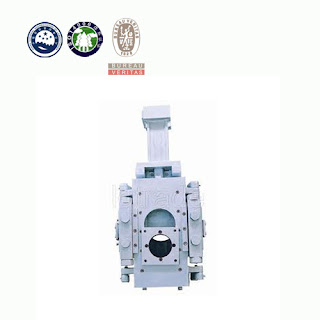
Different Types of Sliding Mechanism Used for Ladle Furnace


As a refractory factory, We Henan Xinmi Changxing Refractory Material Co,. Ltd supply various types sliding mechanism for ladle furnace. Now we would like share with you as follows.
Generally speaking, there are two types of sliding mechanism: Manpower and Hydraulic pressure.
1.       Manpower
a.       C40  used for ladle with capacity of 10-30 tons
b.       B50  for 20-30 tons
c.       B60  for 40-50 tons
2.       Hydraulic pressure
d.       250  for 20-30 tons
e.       310  for 40-60 tons
f.        359  for 50-80 tons
g.       400  for 60-100 tons
h.       459  for 80-150 tons

Apart from sliding mechanism, we manufacture ladle nozzle and slide gate plate as well, customized size are acceptable, welcome for inquiry!

Sliding Mechanism

 Sliding Mechanism


2016年1月20日星期三

How to Prolong Service Life of Slag Line Magnesia Carbon Brick


        In order to improve the service life of slag line magnesia carbon brick, please pay attention to the following matters:
1.  Adopt high purity raw material and suitable additives, make sure the apparent porosity of magnesia carbon brick is no more than 3 percent, the carbon content in slag line magnesia carbon brick should be no less than 14 percent.
2.  Ensure high bulk density.
3.  Strictly control the appearance quality of slag line magnesia carbon bricks, make sure the connection between each two bricks and each layer are good, and decrease the possibility of slag erosion along brick joints.
4.  Use brine to mix magnesium powder to fill the brick joints during brickwork to decrease the possibility of slag erosion along brick joints.
5.  Use more mortar or other filling material in the corners.

                                                  Magnesia Carbon Brick

 Magnesia Carbon Brick

2016年1月13日星期三

The Role of Aluminum in Magnesia Carbon Brick

    The main effect of adding aluminum powder into magnesia carbon brick is antioxidant. The presence of carbon in magnesia carbon brick is to prevent slag erosion in the brick, and carbon itself has the characteristics of easy oxidation. When carbon in magnesia carbon brick is oxidized, the erosion resistance of brick is declined sharply, which will accelerate the damage of the brick, reduce its service life. In order to prevent the oxidation of carbon, we add metal aluminium powder to protect the carbon in brick. The reaction mechanism is as follows:
    1. when magnesia carbon brick is heated, active metal aluminum in brick will firstly react with carbon, became high melting point carbide, then carbon will reunite, getting Al4C3 and Al2O3. Al4C3 will stay on the surface of MgO, to prevent the penetration of slag erosion. In this way, it will improve the bricks erosion resistance, slag resistance and spalling resistance.
    2. When the magnesia carbon bricks under high temperature condition, active aluminum will be oxidized and become high melting product Al2O3. It is a phase change process from metal into nonmetal, the volume of oxidation Al2O3 will have a expansion, making the pores in brick be dense, increasing bricks bulk density and forming the ceramic combination, so as to improve the bricks high temperature rupture resistance.


Refractory Material, Fire Bricks, Refractory Manufacturer, China Refractory - CX Refractories

Refractory Material, Fire Bricks, Refractory Manufacturer, China Refractory - CX Refractories